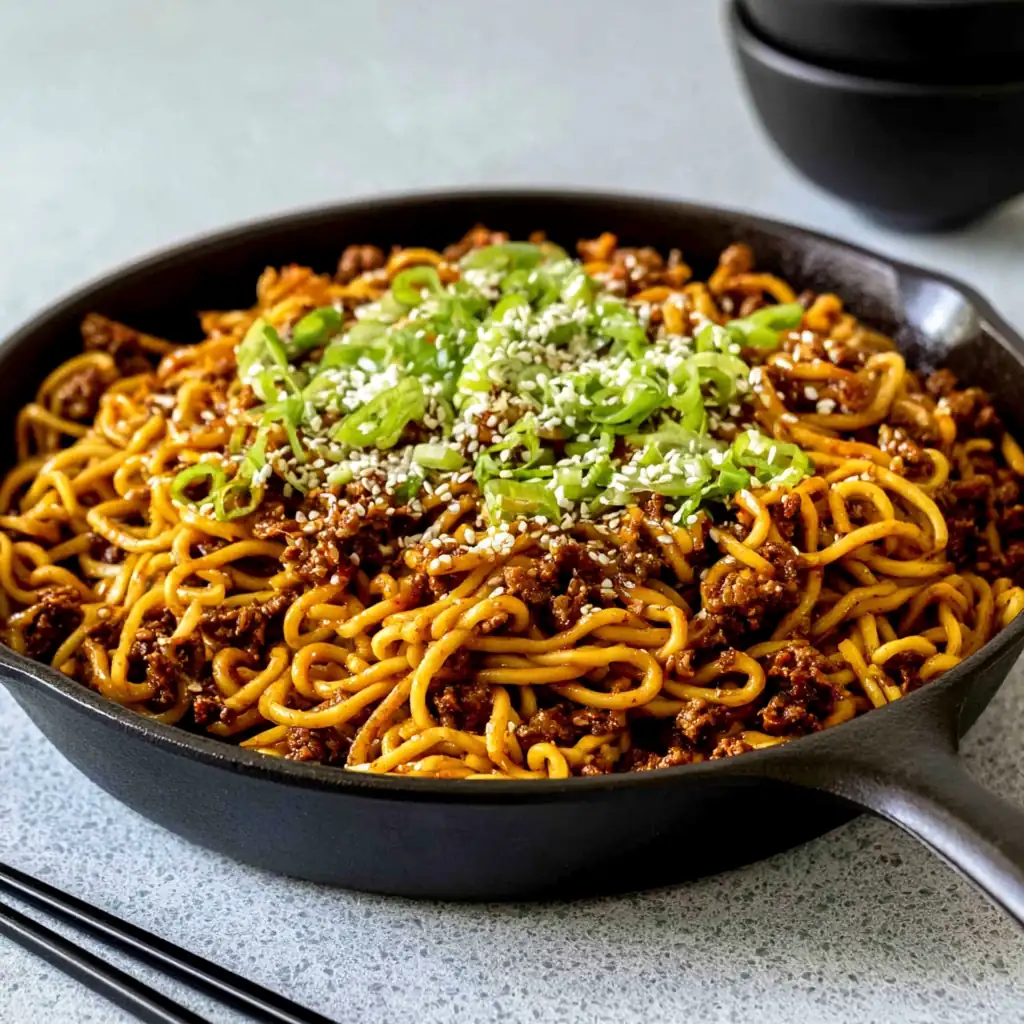
Mongolian Ground Beef Noodles bring together tender noodles, savory beef, garlic, ginger, and a glossy sweet-salty sauce in one fast skillet dinner. This recipe takes only 30 minutes, so it works well for busy weeknights when everyone wants something warm and filling. The ground beef cooks quickly, while the sauce clings to every strand of noodle. In addition, you can add vegetables, adjust the spice, or choose gluten-free noodles without changing the basic method. Because the ingredients are simple and familiar, this dish also makes a practical first stir-fry for newer cooks.
Story
I first made Mongolian Ground Beef Noodles on a night when I had ground beef in the refrigerator but no plan for dinner. Instead of making tacos or burgers again, I mixed soy sauce, brown sugar, broth, garlic, and ginger into a quick skillet sauce. The result tasted rich, comforting, and far more special than the effort suggested. Since then, Mongolian Ground Beef Noodles have become a regular asian-inspired meal in my kitchen. They deliver the sweet-savory flavor people love in takeout, yet the recipe uses one pan and common pantry staples. Better still, the noodles soak up the sauce while the beef adds hearty texture. For a healthy beef stir-fry, add broccoli, bell peppers, carrots, or snap peas. Even with extra vegetables, Mongolian Ground Beef Noodles still fit neatly into a quick 30 minute dinner routine.
Ingredients
- 8 ounces spaghetti, udon, or rice noodles
- 1 pound ground beef
- 2 tablespoons vegetable oil
- 3 garlic cloves, minced
- 1-inch piece fresh ginger, minced
- 1/4 cup soy sauce or tamari
- 1/4 cup packed brown sugar
- 1/2 cup beef broth
- 1 tablespoon hoisin sauce
- 1 tablespoon cornstarch mixed with 2 tablespoons water
- 1/2 teaspoon red pepper flakes, optional
- 1/2 cup chopped green onions
- 1 tablespoon sesame seeds
- 2 cups quick-cooking vegetables, optional
For a lighter version, choose lean ground beef and low-sodium soy sauce. You may also add quick-cooking vegetables, although the recipe tastes complete without them.
Step-by-Step Instructions
Prepare every ingredient before heating the skillet because the cooking moves quickly. Cook the noodles until just tender, brown the beef, add the aromatics and sauce, then toss everything together until evenly coated.
Preparing the Ingredients
Bring a large pot of water to a boil, then cook the noodles according to the package directions. Drain them well and set them aside, but do not rinse wheat noodles because a little surface starch helps the sauce cling. Meanwhile, mince the garlic and ginger, chop the green onions, and measure the sauce ingredients. In a small bowl, stir together the soy sauce, brown sugar, beef broth, hoisin sauce, and red pepper flakes. In a second cup, mix the cornstarch with two tablespoons of cold water until no lumps remain. Because the sauce thickens quickly, keep both mixtures beside the stove. When adding vegetables, slice them into small, even pieces so they cook at the same rate as the beef.
Cooking Instructions
Heat the vegetable oil in a large skillet over medium-high heat. Add the ground beef and spread it across the pan. Let it cook untouched for one minute, then break it into small pieces and continue cooking until browned, about five to seven minutes. Drain extra fat when needed. Add the garlic and ginger, then stir for about one minute until fragrant. Pour in the prepared soy sauce mixture and bring it to a gentle simmer. Stir the cornstarch slurry again, add it to the pan, and cook for one to two minutes until the sauce looks glossy and lightly thickened. Add the cooked noodles, then toss with tongs until every strand carries sauce. Fold in most of the green onions. Remove the skillet from the heat, then top with sesame seeds and the remaining onions before serving.
Tips for Perfect Results
The best Mongolian Ground Beef Noodles balance sweetness, salt, heat, and savory depth. Taste the sauce before adding the noodles, then adjust with broth, brown sugar, or red pepper flakes. Keep the noodles slightly firm, use a wide skillet for better browning, and serve promptly because the sauce thickens as it sits.
Common Mistakes to Avoid
Do not crowd a small skillet, because the beef can steam instead of brown. Likewise, avoid adding garlic too early, since it can burn while the beef cooks. Always mix cornstarch with cold water before it enters the hot pan; otherwise, it may form small lumps. Do not overcook the noodles, especially when using rice noodles or thin spaghetti. They should remain firm enough to handle tossing. In addition, watch the salt level. Regular soy sauce, beef broth, and hoisin sauce all contribute sodium, so low-sodium soy sauce gives you more control. Finally, do not skip stirring the slurry right before adding it, because cornstarch settles quickly at the bottom of the cup.
Pro Tips for Better Flavor
Let the beef form browned edges before breaking it apart, since caramelization adds savory depth. Toast the sesame seeds briefly for a nuttier aroma. Add lime juice or rice vinegar for brightness, or stir in a teaspoon of toasted sesame oil after cooking. For extra vegetables, cook thin bell pepper strips, carrots, or snap peas after browning the beef, then add the garlic and ginger.
Serving and Storage
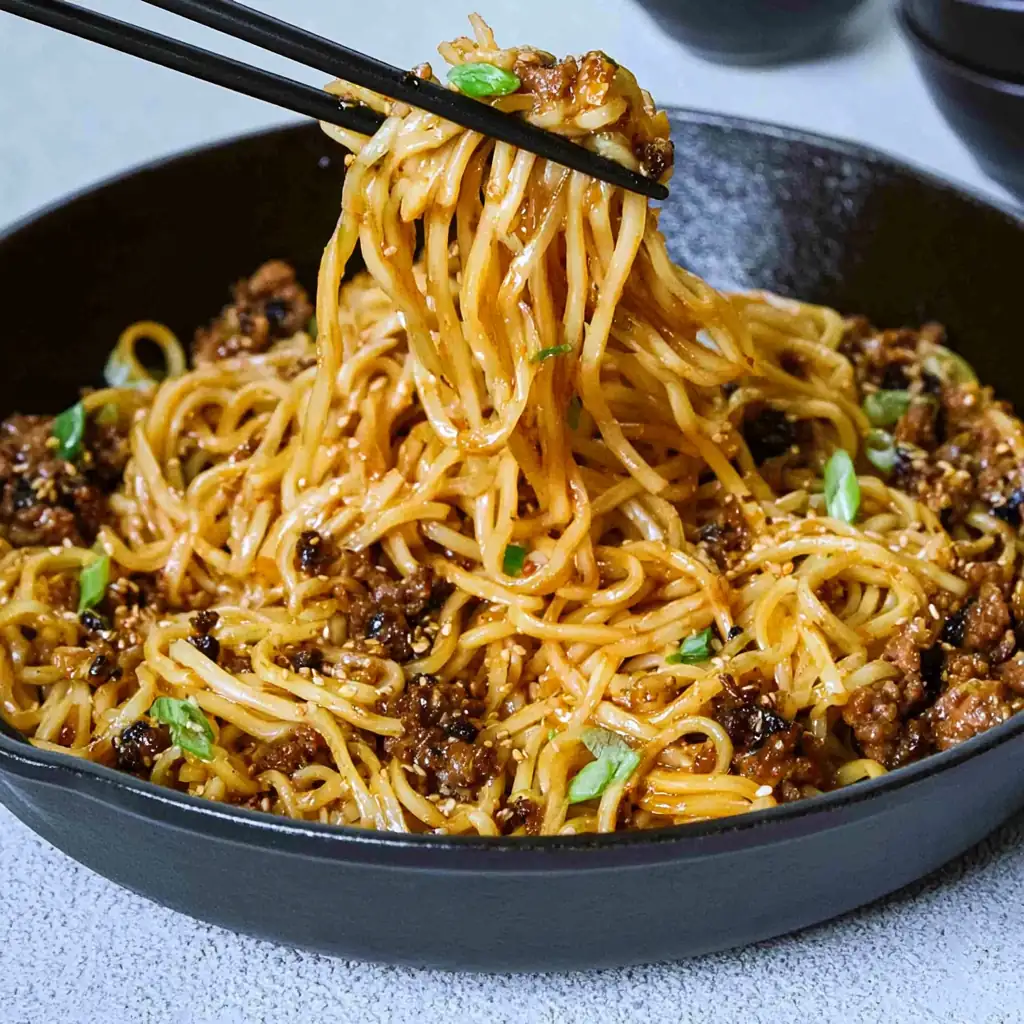
Serve Mongolian Ground Beef Noodles hot while the sauce remains glossy. The dish works as a complete dinner, although cucumber salad, edamame, broccoli, or sautéed greens make good sides. Offer extra green onions, sesame seeds, and sriracha at the table. Add broth when reheating leftovers to loosen the sauce.
How to Serve
Divide the noodles among four bowls and spoon extra beef and sauce over each portion. Add green onions and sesame seeds just before serving. Cucumber ribbons, shredded carrots, or cilantro make fresh garnishes. Serve smaller portions with dumplings or steamed vegetables, or add more vegetables and slightly fewer noodles for a lighter plate.
How to Store Leftovers
Cool leftovers, then transfer them to an airtight container within two hours. Refrigerate for up to three days. To reheat, place the noodles in a skillet over medium-low heat with one or two tablespoons of beef broth or water. Toss gently until hot throughout. You may also microwave individual portions in 30-second intervals, stirring between each interval. Freezing works in a pinch, but the noodles may soften after thawing. For the best texture, freeze only the cooked beef and sauce for up to two months, then prepare fresh noodles when ready to serve. Thaw the sauce overnight in the refrigerator before reheating.
Conclusion
Mongolian Ground Beef Noodles turn basic ingredients into a warm, satisfying dinner with very little preparation. The beef cooks fast, the sauce comes together in one bowl, and the noodles carry every sweet and savory flavor. Because the recipe adapts easily, you can choose your favorite noodles, adjust the spice, or add whatever vegetables you have available. Make it once as written, then shape it to suit your household. With a 10-minute prep time and 20-minute cook time, this dependable skillet meal truly deserves a regular place in your regular dinner rotation. Dinner feels easy again.
Discover more delicious recipes by following me on Facebook and Pinterest.
Frequently Asked Questions
These answers cover common swaps and cooking choices. Since noodles and soy sauce brands vary, make small adjustments to match your pantry while keeping the same quick method.
Can I Make Mongolian Ground Beef Noodles Gluten-Free?
Yes. Choose gluten-free rice noodles and replace regular soy sauce with tamari labeled gluten-free. Also check the hoisin sauce, beef broth, and cornstarch packaging, since some brands may process ingredients with wheat. Cook rice noodles only until tender, then drain them promptly to prevent a soft texture. Because rice noodles absorb sauce quickly, add a small splash of broth while tossing when the skillet looks dry. The finished dish will still have the same sweet, savory, garlicky character.
What Noodles Work Best for This Recipe?
Udon noodles give the dish a thick, chewy bite, while spaghetti offers the easiest pantry option. Rice noodles create a lighter texture and work well for gluten-free cooking. Lo mein or ramen noodles also taste good, although you should discard any seasoning packet. Whatever type you choose, cook it just to al dente or according to the lower end of the package timing. Then drain it thoroughly before adding it to the skillet. Firm noodles hold up better as they absorb the warm Mongolian-style sauce.
Can I Add Vegetables to the Skillet?
Yes. Broccoli florets, bell peppers, carrots, mushrooms, zucchini, and snap peas all pair well with the sauce. Cut the vegetables into small pieces so they cook quickly. After browning the beef, move it to one side of the skillet and cook the vegetables for three to five minutes before adding the garlic and ginger. For firmer broccoli, add two tablespoons of water and cover the pan for one minute. Then uncover it, let the moisture cook away, and continue with the sauce. This simple addition adds color, texture, and extra nutrition.
Print
Mongolian Ground Beef Noodles
- Total Time: 30 minutes
- Yield: 4 servings 1x
Description
A quick and flavorful noodle dinner made with savory ground beef, tender noodles, garlic, ginger, and a rich, slightly sweet Mongolian-style sauce.
Ingredients
- 8 ounces spaghetti, udon, or rice noodles
- 1 pound ground beef
- 2 tablespoons vegetable oil
- 3 garlic cloves, minced
- 1-inch piece fresh ginger, minced
- 1/4 cup soy sauce or tamari
- 1/4 cup packed brown sugar
- 1/2 cup beef broth
- 1 tablespoon hoisin sauce
- 1 tablespoon cornstarch
- 2 tablespoons cold water
- 1/2 teaspoon red pepper flakes, optional
- 1/2 cup chopped green onions
- 1 tablespoon sesame seeds
- 2 cups quick-cooking vegetables, optional
Instructions
- Bring a large pot of water to a boil. Cook the noodles according to the package directions until just tender. Drain well and set aside.
- Stir together the soy sauce, brown sugar, beef broth, hoisin sauce, and red pepper flakes in a small bowl.
- Mix the cornstarch with 2 tablespoons cold water in a separate cup until smooth.
- Heat the vegetable oil in a large skillet over medium-high heat.
- Add the ground beef and cook for 5 to 7 minutes, breaking it into small pieces, until browned. Drain excess fat when needed.
- Add the garlic and ginger. Cook for about 1 minute until fragrant.
- Pour the prepared soy sauce mixture into the skillet and bring it to a gentle simmer.
- Stir the cornstarch slurry again, then add it to the skillet. Cook for 1 to 2 minutes until the sauce becomes glossy and lightly thickened.
- Add the cooked noodles and toss until the sauce evenly coats every strand.
- Fold in most of the green onions. Remove the skillet from the heat.
- Garnish with sesame seeds and the remaining green onions, then serve hot.
Notes
- For more heat, add sriracha or extra red pepper flakes.
- Use low-sodium soy sauce for greater control over the salt level.
- Add broccoli, bell peppers, carrots, mushrooms, or snap peas for extra vegetables.
- For a gluten-free version, use rice noodles, gluten-free tamari, and gluten-free hoisin sauce.
- Refrigerate leftovers in an airtight container for up to 3 days.
- Add a splash of broth or water when reheating to loosen the sauce.
- Prep Time: 10 minutes
- Cook Time: 20 minutes
- Category: Dinner
- Method: Stovetop
- Cuisine: Asian Fusion
Nutrition
- Serving Size: 1 serving
- Calories: 450
- Sugar: 18
- Sodium: 1180
- Fat: 18
- Saturated Fat: 6
- Unsaturated Fat: 11
- Trans Fat: 0.5
- Carbohydrates: 51
- Fiber: 3
- Protein: 29
- Cholesterol: 76