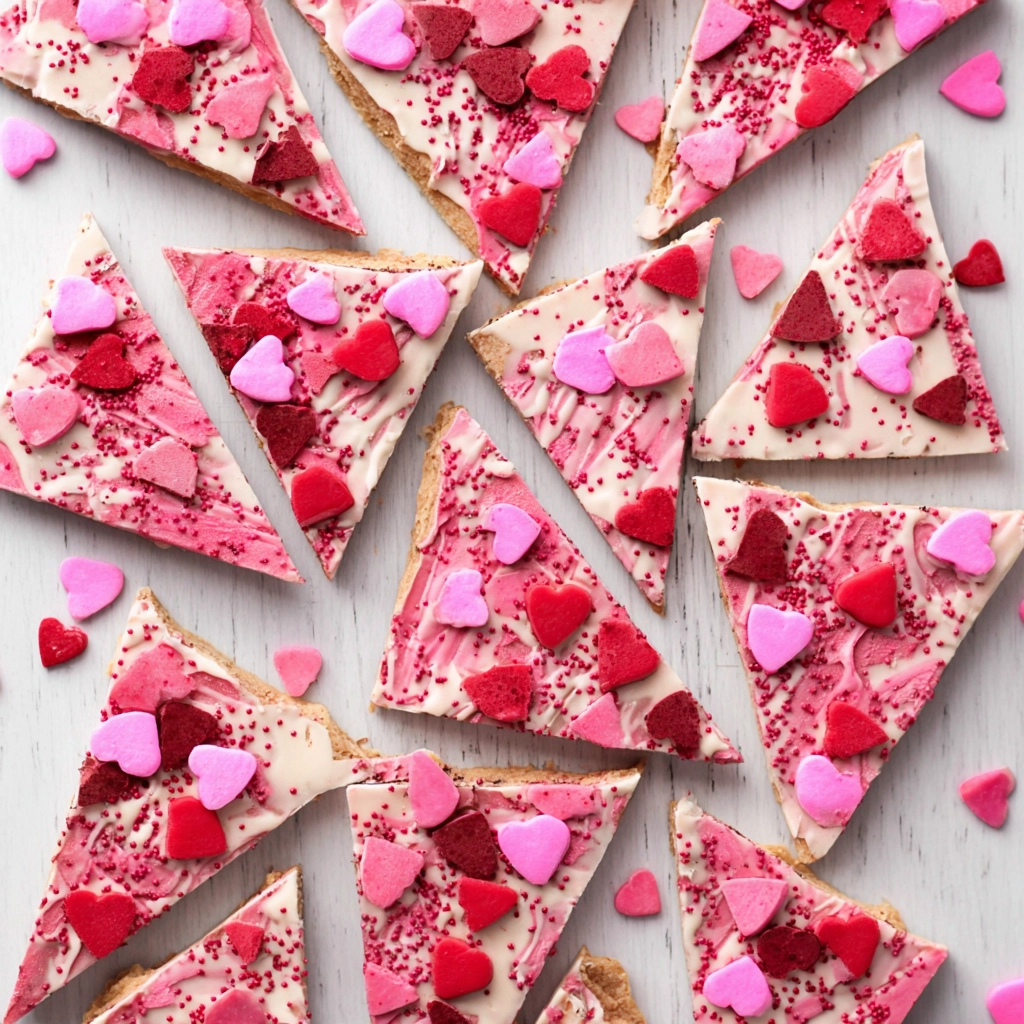
Valentines Day Bark is a cheerful, no-bake candy that delivers bold color, rich chocolate flavor, and endless decorating fun in one easy recipe. This festive treat comes together quickly with melted chocolate, candy melts, and seasonal toppings, making it ideal for sharing with loved ones. Whether you package it as a heartfelt homemade gift or serve it at a party, Valentines Day Bark offers a sweet way to celebrate without complicated steps or special tools.
Story
Valentines Day Bark has always been one of those recipes that feels both thoughtful and effortless at the same time. I started making Valentines Day Bark years ago when I needed a quick homemade candy that still felt personal. With a few types of chocolate and some festive toppings, the result looked bakery-worthy with very little effort. What makes Valentines Day Bark so appealing is how customizable it is. You can change the colors, swap the candy, or adjust the swirl pattern to fit your style. Every batch of Valentines Day Bark feels slightly different, which makes it special for gifting and sharing during the holiday.
Ingredients
This recipe uses simple, easy-to-find ingredients that melt smoothly and set beautifully.
-
1½ cups dark chocolate chips
-
12 ounces white chocolate baking bars, broken into pieces
-
¾ cup pink candy melts
-
¼ cup Valentine’s Day candy
-
2 tablespoons Valentine’s Day sprinkles
Step-by-Step Instructions
Preparing the Ingredients
Line a half sheet baking pan with parchment paper, leaving an overhang on the sides for easy lifting later. Measure out all chocolates, candy, and sprinkles before you begin. Breaking the white chocolate bars into smaller pieces helps them melt evenly. Keep the candy and sprinkles ready nearby so they can be added while the chocolate is still warm.
Cooking Instructions
Melt the dark chocolate chips in a microwave-safe bowl, starting with 30 seconds, then heating in short intervals while stirring until smooth. Spread the melted dark chocolate into a thin, even layer on the prepared baking pan. Let it rest until mostly set but still slightly soft. Melt the white chocolate using the same method, then melt the pink candy melts in a separate bowl. Pour the white chocolate over the dark chocolate and spread quickly. Drizzle the pink candy melts over the top and swirl gently with a toothpick. Sprinkle the candy and sprinkles evenly over the surface. Chill until completely firm, then break into pieces.
Tips for Perfect Results
Common Mistakes to Avoid
Overheating chocolate can cause it to thicken and lose its smooth texture, so always melt slowly and stir often. Adding layers too early can cause colors to blend instead of staying distinct. Skipping parchment paper may lead to sticking and uneven edges, making the bark harder to remove cleanly from the pan.
Pro Tips for Better Flavor
Use high-quality chocolate bars for a smoother finish and richer taste. Let each layer set just enough so it bonds without fully hardening. If you want a more dramatic swirl, drag the toothpick lightly across the surface without touching the bottom layer.
Serving and Storage
How to Serve
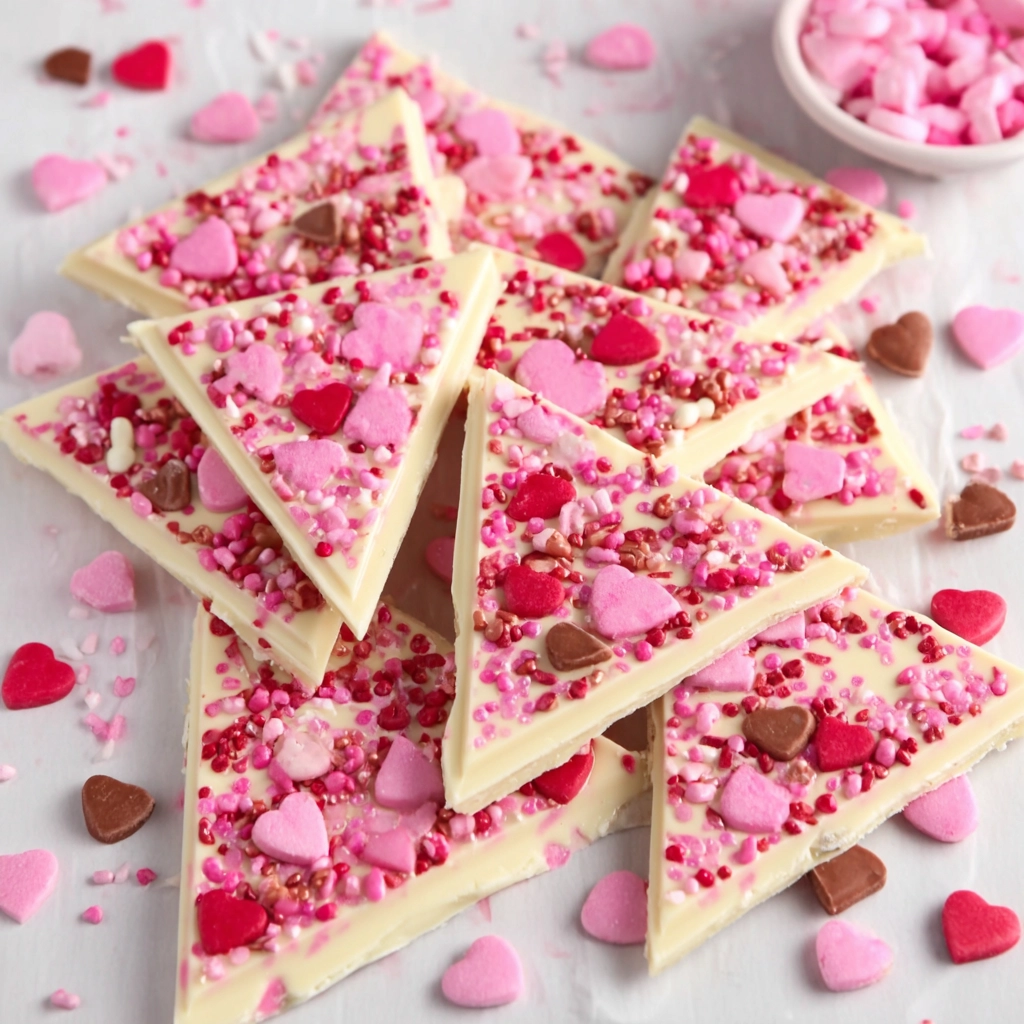
Serve Valentines Day Bark broken into irregular pieces for a casual look, or cut it into neat squares for gift boxes and dessert platters. It pairs well with coffee, hot cocoa, or a glass of milk and works beautifully as a party treat or edible Valentine.
How to Store Leftovers
Store the bark in an airtight container at room temperature for up to five days or refrigerate it for up to two weeks. For longer storage, freeze in a freezer-safe container for up to four months, separating layers with parchment paper.
Conclusion
Valentines Day Bark proves that homemade candy does not need to be complicated to feel special. With simple ingredients, bright colors, and endless decorating options, this recipe delivers both style and flavor. Make a batch for someone you love, package it with care, and enjoy how such a simple treat can bring so much joy.
Discover more delicious recipes by following me on Facebook and Pinterest.
Frequently Asked Questions
Can I use milk chocolate instead of dark chocolate?
Yes, milk chocolate works well and creates a sweeter base. Just keep the melting process slow so it stays smooth and spreads easily.
Do candy melts taste like chocolate?
Candy melts have a sweeter, vanilla-forward flavor rather than true chocolate. They work well here because they melt smoothly and add vibrant color.
Can I make this bark ahead of time?
Absolutely. Valentines Day Bark stores well, making it ideal for preparing several days in advance before gifting or serving.
Print
Valentines Day Bark
- Total Time: 55 minutes
- Yield: {{yield}}
- Diet: Vegetarian
Description
Valentine’s Day Chocolate Bark is the easiest way to create custom colorful candy all dressed up for someone special. Use your favorite festive sweet snacks to decorate and load it with love.
Ingredients
- 1½ cups dark chocolate chips
- 12 ounces (3 4-ounce) white chocolate baking bars
- ¾ cup pink candy melts
- ¼ cup Valentine’s Day candy
- 2 tablespoons Valentine’s Day sprinkles
Instructions
- Line a half sheet baking pan with parchment paper and set to the side.
- In a microwave safe bowl, heat the dark chocolate chips for 30 seconds and then mix well.
- Continue heating in 15-20 second increments, stirring well after each time, until completely melted and smooth.
- Pour the chocolate onto the parchment paper and spread out into a thin layer with a spreading spatula.
- Place the pan to the side for about 10 minutes or until mostly, but not completely, hardened.
- After the chocolate has almost completely set, break the white chocolate bars up into a microwave safe bowl.
- Heat in the microwave for 30 seconds, stir well and then continue heating in short increments and stirring until completely smooth. Mix well.
- Put the pink candy melts in a separate microwave safe bowl and heat the candy melts as you did the dark chocolate and white chocolate. Start with 30 seconds, and continue heating in 15-20 second increments and stirring until the candy is melted and smooth.
- Pour the melted white chocolate all over the dark chocolate and spread quickly. This layer will harden rapidly so work quickly.
- Before the white chocolate layer sets, drizzle the melted pink candy melts over the top of the white chocolate.
- Gently run a toothpick through the pink and white layers to make a marble pattern, trying to avoid the dark chocolate.
- While the chocolate is still warm, sprinkle the candy and sprinkles evenly over the top.
- Cool for 30 minutes or until completely hardened.
- Break or cut into pieces and serve.
Notes
- Serving Size: 4-6 cups of bark
- To Store: Store your bark in an airtight bag or container at room temperature for 4-5 days or 2 weeks in the refrigerator.
- To Freeze: Store your bark in a freezer-safe container for up to 4 months in the freezer.
- Depending on how small or large the pieces of bark are broken into, the servings can easily be adjusted.
- Make sure to leave an overhang (extra parchment paper) when preparing the baking sheet so that you can easily lift the hardened chocolate out of it.
- It is helpful to crease where the bottom of the pan meets the edges for a defined shape.
- Heat each chocolate layer slowly so that it doesn’t seize. If you overheat any type of chocolate or candy melt, it will start to lump up and it is nearly impossible to get it spread evenly after that.
- Be patient and heat in small increments with a lot of stirring for best results.
- You want your layers to be almost completely hardened when you add the next layer. If the first layer is too soft then the two will blend.
- If you want a swirl effect then you may choose to do this intentionally.
- If you wait until each layer is completely hardened before adding the next layer, they won’t bond to each other and you may find that the layers snap off of one another.
- Prep Time: 10 minutes
- Cook Time: 45 minutes
- Category: {{category}}
- Method: {{method}}
- Cuisine: {{cuisine}}
Nutrition
- Serving Size: {{serving_size}}
- Calories: {{calories}}
- Sugar: {{sugar}}
- Sodium: {{sodium}}
- Fat: {{fat}}
- Saturated Fat: {{saturated_fat}}
- Unsaturated Fat: {{unsaturated_fat}}
- Trans Fat: {{trans_fat}}
- Carbohydrates: {{carbohydrates}}
- Fiber: {{fiber}}
- Protein: {{protein}}
- Cholesterol: {{cholesterol}}