
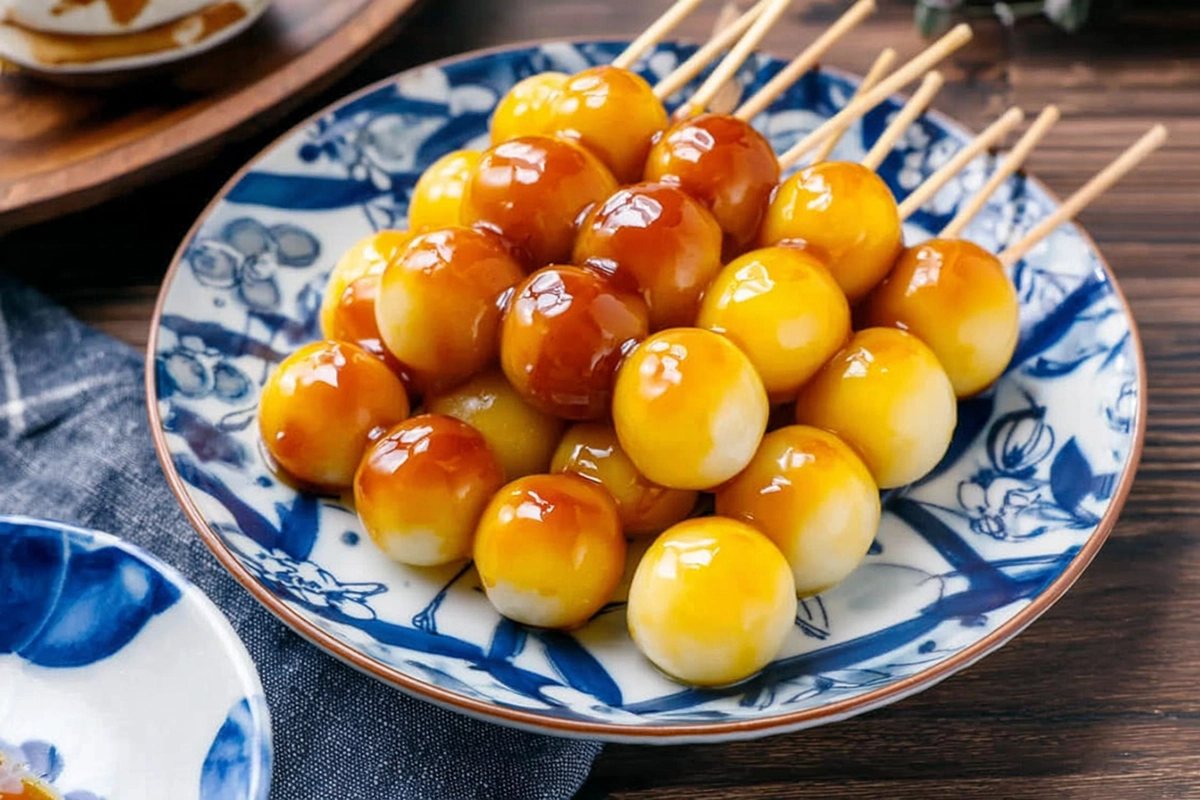
If you’ve ever strolled through a Japanese festival or watched an anime where the characters happily munch on skewered dumplings, chances are you’ve seen Mitarashi Dango. These chewy little Japanese rice dumplings are glazed with a glossy, sweet soy glaze that’s equal parts savory and sweet—basically, the best of both worlds. And guess what? You don’t have to book a flight to Kyoto to enjoy them at home.
This recipe is your ticket to making an authentic traditional Japanese snack that’s fun to prepare, beautiful to serve, and downright delicious to eat. Plus, it’s surprisingly beginner-friendly. If you’ve ever made playdough with your kids (or let’s be real, even just squished it for stress relief), you already have the skills to roll these dumplings.
Whether you’re looking for a cozy weekend project, something special to share with friends, or a sweet bite that doubles as a cultural experience, Mitarashi Dango delivers. They’re chewy, glossy, and guaranteed to make your kitchen smell like a Japanese street festival. Let’s dive in!
Why You’ll Love This Mitarashi Dango Recipe
-
Perfect balance of sweet and savory.
-
Fun hands-on activity (kids love helping roll the dough!).
-
Elegant enough for entertaining, simple enough for weekday snacking.
-
A chance to explore Japanese food culture from your own kitchen.
Mitarashi Dango
- Total Time: 45 minutes
- Yield: 5 servings 1x
Description
Mitarashi Dango are traditional Japanese rice dumplings skewered on sticks and coated in a glossy, sweet soy glaze. Chewy, slightly smoky, and perfectly balanced between sweet and savory, they’re a classic Japanese festival treat that’s simple to make at home and a fun way to explore authentic Japanese flavors.
Ingredients
For Dumplings (Method 1):
-
¾ cup (90 g) shiratamako (glutinous rice flour)
-
⅔ cup (85 g) joshinko (short-grain rice flour)
-
⅔ cup (160 ml) boiling water
Alternative (Method 2):
-
1⅓ cup (160 g) dangoko (combined rice dumpling flour)
-
⅔ cup (160 ml) cold water
For the Glaze:
-
2 tbsp (30 ml) soy sauce
-
2 tbsp (30 ml) mirin
-
4 tbsp (50 g) sugar
-
⅔ cup (160 ml) water
-
2 tbsp (15 g) cornstarch or potato starch
Instructions
-
Make the dough: In a bowl, mix shiratamako and joshinko. Slowly add boiling water and knead until smooth. (If using dangoko, add cold water instead.) Dough should feel soft like your earlobe.
-
Shape dumplings: Divide into 16 equal portions and roll into balls, smoothing cracks with a damp fingertip.
-
Cook dumplings: Bring water to a boil. Add dumplings and cook until they float, then simmer 1–2 minutes longer.
-
Cool & skewer: Transfer to ice water, drain, and skewer 3 per stick.
-
Prepare glaze: In a saucepan, combine soy sauce, mirin, sugar, water, and starch. Cook over medium heat, stirring, until glossy and thick.
-
Optional sear: Grill or sear dumplings lightly for smoky flavor.
-
Glaze & serve: Brush dumplings with glaze while warm. Serve immediately.
Notes
Use boiling water for Method 1 flours; cold water for dangoko.
If dough is too dry, add a splash of water; too sticky, dust with rice flour.
Don’t overcook dumplings—remove soon after they float.
Stir glaze continuously to keep it glossy and lump-free.
A light char adds authentic festival-style flavor.
Best eaten fresh; refrigerating makes them firmer.
- Prep Time: 30 minutes
- Cook Time: 15 minutes
- Category: Desserts / Snacks
- Method: Boiling + Glazing
- Cuisine: Japanese
Ingredients You’ll Need
For Dumplings (Method 1):
-
¾ cup (90 g) shiratamako (glutinous rice flour)
-
⅔ cup (85 g) joshinko (short-grain rice flour)
-
⅔ cup (160 ml) boiling water
Alternative (Method 2):
-
1⅓ cup (160 g) dangoko (combined rice dumpling flour)
-
⅔ cup (160 ml) cold water
For the Glaze:
-
2 tbsp (30 ml) soy sauce
-
2 tbsp (30 ml) mirin
-
4 tbsp (50 g) sugar
-
⅔ cup (160 ml) water
-
2 tbsp (15 g) cornstarch or potato starch
Step-by-Step: How to Make Mitarashi Dango
-
In a mixing bowl, combine shiratamako and joshinko. Slowly add boiling water, stirring until the dough comes together. (If using dangoko, use cold water instead.)
-
Knead until smooth—it should feel soft like your earlobe (yes, really!).
-
Divide the dough into 16 equal pieces and roll into balls. Smooth any cracks with a damp fingertip.
-
Bring a pot of water to a boil. Cook dumplings until they float, then let them simmer another 1–2 minutes.
-
Transfer dumplings into ice water, then drain. Skewer 3 per stick.
-
In a small saucepan, combine soy sauce, mirin, sugar, water, and starch. Cook over medium heat, stirring, until thick and glossy.
-
Optional but amazing: lightly sear skewered dumplings with a grill, torch, or hot pan for that smoky flavor.
-
Brush or drizzle glaze over warm dumplings. Serve immediately and enjoy!
Prep Time: 30 minutes | Cooking Time: 15 minutes | Total Time: 45 minutes
Calories: 77 | Servings: 5
Cooking Tips for Perfect Dango
Making dango might sound fancy, but it’s actually quite forgiving. Here are some tips to make sure your Japanese rice dumplings come out just right:
-
Water Temperature Matters: For Method 1, don’t skip the boiling water. It helps the flours bind properly. For dangoko, stick with cold water.
-
Texture Check: If your dough is too dry, add a tiny splash of water. Too sticky? A dusting of rice flour will fix it.
-
Don’t Overcook: Once the dumplings float and cook for an extra minute or two, they’re done. Overcooking makes them mushy.
-
Glaze Consistency: Stir continuously while cooking the glaze. It should look glossy and thick, not runny.
-
Charred Finish: A quick sear adds smoky depth and makes them taste just like festival-style dango.
And remember: if your dumplings look a little “unique,” that’s okay—imperfections just make them homemade with love!
What to Serve with Mitarashi Dango
Mitarashi Dango can shine all on its own, but if you want to create a whole experience, try pairing it with:
-
Green Tea (Matcha or Sencha): The slight bitterness balances the sweet soy glaze beautifully.
-
Other Japanese Snacks: Think dorayaki (pancake sandwiches) or taiyaki (fish-shaped cakes with sweet filling).
-
Light Meals: Serve after a simple Japanese dinner like miso soup and rice for the perfect sweet finish.
-
Seasonal Fruit: Fresh strawberries or slices of Asian pear keep things refreshing.
These dumplings aren’t just a dessert—they’re a conversation starter. Set them out at a gathering, and watch them disappear faster than you can say itadakimasu!
How to Store Your Dango
Dango are best eaten fresh, while they’re still warm and chewy. But if you have leftovers (a rare event in my house), here’s how to handle them:
-
Room Temperature: Keep them covered for a few hours if you plan to eat them the same day.
-
Refrigerator: Store in an airtight container for up to 2 days. Note that refrigeration can make them hard, so reheat gently in the microwave with a damp paper towel.
-
Freezer: Not ideal for dango, as the texture doesn’t hold up well once thawed.
If you need to prep ahead, you can make the dumplings in advance and store them without glaze. When you’re ready to serve, simply reheat, brush with the fresh glaze, and they’ll taste as good as new.
FAQs About Mitarashi Dango
Can I substitute the rice flours?
If you can’t find shiratamako or joshinko, dangoko is the easiest substitute since it’s a premixed flour for dango.
Can I make the glaze less sweet?
Absolutely! Just reduce the sugar slightly. The glaze should still be glossy and thick.
Can I grill the dango instead of boiling?
Boiling is essential for the texture, but after boiling, you can grill for that smoky, authentic street-food flavor.
How can I make these gluten-free?
Good news—these dumplings already are! Both rice flours are naturally gluten-free.
What if I don’t have skewers?
No worries! You can serve them unskewered in little bowls and drizzle with glaze. Still delicious.
Bringing It All Together
Mitarashi Dango is more than just a traditional Japanese snack—it’s a little taste of Japanese culture that you can recreate in your kitchen. These chewy dumplings with their shiny, sweet soy glaze are proof that sometimes the simplest ingredients make the most magical dishes.
Whether you’re making them for family fun, a cultural food night, or just because you’re craving something different, these dumplings are guaranteed to win hearts. And who knows? They might just become one of your own family traditions, the way they did in mine.
So grab your skewers, whip up that glossy glaze, and let the joy of cooking connect you to something deliciously special.
Discover more delicious recipes by following me on Facebook and Pinterest.