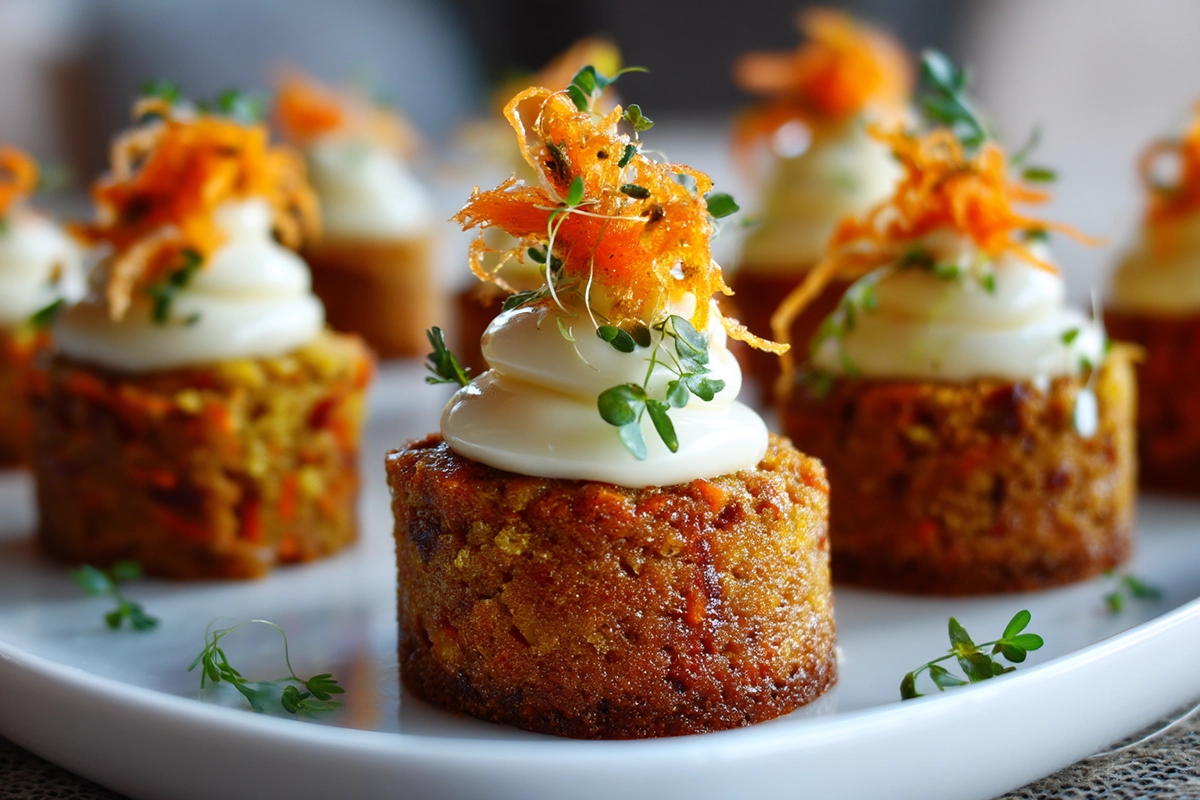
Mini carrot cakes are small, flavorful, and downright irresistible. Whether you’re prepping for a family gathering or a birthday bash or just need a sweet pick-me-up, these little wonders always deliver. Packed with the classic charm of a traditional carrot cake but in adorable, personal portions—they’re hard not to love.
This detailed guide will walk you through everything from the roots of carrot cake to baking your very own mini version. Let’s dive right in.
Introduction
What Are Mini Carrot Cakes?
Mini carrot cakes are simply small, individual-sized versions of the well-loved classic carrot cake. Moist, tender, and loaded with grated carrots and warm spices, they’re often topped with rich cream cheese frosting. These dainty desserts are baked in muffin tins, ramekins, or mini cake molds, making them perfect for serving at parties or storing for quick treats.
What makes them special? They hold all the comforting flavors of a large carrot cake but skip the hassle of slicing and serving. Plus, everyone gets their little cake—no fighting over corner pieces!
The Appeal of Mini Carrot Cakes
There’s something magical about individual desserts. Not only do they look adorable, but they also allow for better portion control and a more personal touch. And when it comes to carrot cake, the magic multiplies.
Why are mini carrot cakes such a hit?
-
They’re easy to share.
-
They bake faster than full-sized cakes.
-
You can dress each one up uniquely.
-
They’re ideal for lunchboxes, parties, and anytime snacking.
Carrot cake itself has always had a loyal fan base. Its moist texture, rich flavor, and subtle sweetness from carrots make it hard to beat. Add in a silky frosting, and you’ve got a treat that satisfies every time. Mini versions just take all of that goodness and pack it into perfect little bites.
Next up, we’ll explore how carrot cakes first came to be and why they’re still such a beloved dessert today.
History and Origin
The Roots of Carrot Cake
Carrot cake didn’t just pop up out of nowhere. It has deep roots, going back hundreds of years. Back when sugar was expensive and rare, people used carrots to sweeten their food. Carrots were easy to find and already had natural sugar. That’s how the idea of carrot-based desserts first began.
Some say the first version of carrot cake started in Europe, as far back as the Middle Ages. People made a dish called carrot pudding. It was a soft mix of carrots, flour, and fat—more like a baked custard than cake. But it was a big deal back then.
How Carrot Cake Became a Classic
Over time, that simple pudding evolved. By the 1800s, bakers began making real cakes with grated carrots. These early cakes were still not the rich, spiced version we know today. But they were on the right track.
The modern carrot cake we love today didn’t rise to fame until the 20th century. During World War II, when many ingredients were rationed, carrots were again used to sweeten baked goods. That gave carrot cake a second life.
Later, in the 1960s and 70s, carrot cake became trendy in America. Cream cheese frosting was added. Nuts and raisins joined the mix. And suddenly, it wasn’t just practical—it was delicious.
Today, carrot cake stands out as a comfort food classic. And the mini version? Even better. It takes that rich history and makes it bite-sized and fun.
Let’s move on to the heart of every carrot cake—the ingredients that make it truly shine.
Essential Ingredients
What Goes Into Mini Carrot Cakes?
You don’t need fancy stuff to make mini carrot cakes. Just a few simple ingredients come together to make something special. Let’s look at what you’ll need.
Carrots: The Stars of the Show
Use fresh, grated carrots.
They add moisture, natural sweetness, and that soft, cake-like texture. Avoid pre-shredded ones—they’re too dry and thick. Finely grating the carrots helps them blend better with the batter.
Flour and Leavening
All-purpose flour works best.
It gives structure without making the cakes too heavy. You can also mix in a little whole wheat flour for extra fiber.
Add baking soda and baking powder.
They help the cakes rise and turn fluffy. Using both gives a better lift.
Spices: Warm and Cozy
Cinnamon is a must.
A little nutmeg or ginger adds depth. Don’t go overboard. A pinch goes a long way. These spices are what give carrot cake its rich, warm flavor.
Sweeteners: Keep It Just Right
Brown sugar is ideal.
It adds moisture and a hint of caramel. You can mix in a bit of white sugar for balance. For a lighter option, try coconut sugar or maple syrup.
Fats: Moist and Soft Texture
Use vegetable oil or melted butter.
Oil makes the cake extra moist. Butter gives more flavor. Pick what you like best. Some even mix both for the perfect balance.
Extras for Flavor and Crunch
Add-ins make each bite interesting.
Try chopped walnuts, pecans, or raisins. Some people like shredded coconut or crushed pineapple, too. Just don’t overload the batter. Too much can make the cakes heavy.
Mini carrot cakes are all about balance. Moist carrots, warm spices, just enough sugar, and the right texture. With these basics in place, you’re ready to start baking.
Next, we’ll cover the tools you’ll need to bring these little cakes to life.
Baking Equipment
Tools You Need for Mini Carrot Cakes
You don’t need a fancy kitchen to make mini carrot cakes. Just a few simple tools will do the trick. Let’s break it down.
Mini Cake Pans and Baking Options
Use a mini muffin tin or cupcake pan.
These are easy to find and work great. You can also try silicone molds or ramekins. Just make sure to grease them well so nothing sticks.
Watch the size of your pans.
Smaller cakes bake faster. So keep an eye on the oven. Overbaking can dry them out.
Mixing Bowls and Utensils
Use two bowls: one for dry, one for wet.
This makes mixing easier and keeps the batter smooth.
Use a whisk, spoon, or hand mixer.
You don’t need anything fancy. Just mix until everything comes together.
Grater or Food Processor
You’ll need to grate the carrots.
A box grater works fine. A food processor makes it faster if you’re baking a lot. Just don’t let the carrots turn mushy.
Measuring Cups and Spoons
Use dry and liquid measuring tools.
This helps you get the right balance. Baking is all about getting the amounts just right.
Having the right tools makes baking smoother. You’ll save time and avoid mistakes. With your gear ready, it’s time to mix up the batter and bake your mini carrot cakes to perfection.
Step-by-Step Baking Guide
How to Make Mini Carrot Cakes
Making mini carrot cakes is easier than it sounds. With a little prep and care, you’ll have soft, tasty cakes ready to enjoy. Follow these simple steps.
Preparing the Batter
Start with the dry ingredients.
In a large bowl, mix the flour, baking soda, baking powder, salt, and spices. Stir well so that everything blends evenly.
Now, mix the wet ingredients.
In another bowl, whisk together the eggs, oil (or melted butter), and sugars. Mix until smooth and creamy.
Add the grated carrots.
Fold them into the wet mix. If you’re using extras like nuts or raisins, add them now.
Combine the wet and dry.
Pour the wet mix into the dry bowl. Stir gently until just combined. Don’t overmix or the cakes may turn out dense.
Filling the Pans
Grease your mini pans well.
Use a non-stick spray or a little oil with a brush.
Spoon the batter into the pans.
Fill each one about two-thirds full. This gives the cakes room to rise.
Baking the Cakes
Preheat your oven to 350°F (175°C).
Let it get fully hot before baking.
Bake for 15 to 20 minutes.
Smaller cakes bake quickly. Check with a toothpick—if it comes out clean, they’re done.
Cool the cakes completely.
Let them sit in the pan for a few minutes. Then, move them to a rack to cool fully.
Once they’re cool, it’s time for the fun part—frosting and decorating. These little cakes are already tasty, but the right topping takes them to the next level.
Frosting and Decorating
Topping Your Mini Carrot Cakes Right
Frosting adds the perfect finish. It gives your cakes a creamy, rich layer of flavor. Let’s talk about the best choices and fun ways to decorate.
Classic Cream Cheese Frosting
This is the most loved option.
Cream cheese frosting is smooth, sweet, and slightly tangy. It goes perfectly with the warm spices in the cake.
What you need:
-
Cream cheese (softened)
-
Butter (softened)
-
Powdered sugar
-
A little vanilla extract
How to make it:
Beat the cream cheese and butter until fluffy. Slowly add powdered sugar. Mix until smooth. Add vanilla last. That’s it!
Other Frosting Choices
Try a twist on the classic.
Add a bit of orange zest for a fresh taste. Or use a dash of cinnamon for extra warmth.
Need a lighter option?
You can make a whipped cream cheese version. Or skip the frosting and just dust the tops with powdered sugar.
Want dairy-free?
Use dairy-free cream cheese and plant-based butter. It has the same texture and no dairy.
Fun Decoration Ideas
Make each mini cake stand out.
Use a piping bag for neat swirls of frosting. No bag? Use a spoon to spread it on gently.
Top with extras.
Sprinkle chopped nuts, coconut flakes, or a few shredded carrots. You can even add tiny fondant carrots for fun.
Keep it simple or go fancy.
Either way, these mini carrot cakes look amazing with just a bit of effort.
With the frosting and decoration done, you’re almost there. Now, let’s look at what’s inside these sweet little cakes nutrition-wise.
Nutritional Information
What’s Inside Mini Carrot Cakes?
Mini carrot cakes may be small, but they pack in a lot. Let’s take a quick look at what’s really in each bite.
Calories in Each Cake
Most mini carrot cakes have 150 to 250 calories.
This depends on the size, the frosting, and what extras you add. Frosting adds more calories, so keep that in mind.
Want fewer calories?
Use less sugar. Pick a lighter frosting or skip it. You can also make smaller portions.
Macronutrients: Fats, Carbs, and Protein
These little cakes have a balance of nutrients.
They give you energy but should still be a treat—not an everyday snack.
-
Carbohydrates: From sugar, flour, and carrots
-
Fats: From oil, butter, and nuts
-
Protein: From eggs and nuts
Add-ins can change things.
Nuts add healthy fats. Raisins and pineapple add more sugar.
Fiber and Natural Sugars
Carrots bring fiber and natural sweetness.
Using whole ingredients is better than using boxed mixes. It helps keep the treat wholesome.
Want more fiber?
Swap some white flour for whole wheat. Add ground flaxseed or oats in small amounts.
Mini carrot cakes can be made lighter and healthier with small changes. Now that you know what’s in them, storing them the right way keeps them fresh and tasty. Let’s get into that next.
Storage and Shelf Life
How to Keep Mini Carrot Cakes Fresh
These little cakes are easy to store. You just need to follow a few simple steps. That way, they stay soft, moist, and full of flavor.
Room Temperature Storage
If they’re not frosted, keep them at room temp.
Place the cakes in an airtight container. Keep them in a cool, dry spot. They’ll stay fresh for up to 2 days.
Don’t leave frosted cakes out too long.
The cream cheese frosting can spoil. If they’re frosted, move them to the fridge after a few hours.
Storage in the Fridge
Refrigeration is best for frosted cakes.
Put the cakes in a sealed container or wrap them with plastic wrap. This keeps them from drying out.
How long do they last in the fridge?
Up to 5 days. Just take them out a little before serving so they come to room temperature. That way, the cake is soft, and the frosting is creamy.
Freezing for Later
Want to keep them longer? Freeze them.
Wrap each cake tightly with plastic wrap. Then, place them in a freezer-safe bag or box.
How long can they stay frozen?
Up to 3 months. Thaw them in the fridge or on the counter. Frost them after thawing for the best texture.
Mini carrot cakes are great for making ahead. Whether you eat them now or later, a little care keeps them just as tasty as day one. Ready to mix things up? Let’s explore some fun twists and special diet versions next.
Variations and Dietary Adaptations
Make Mini Carrot Cakes Your Way
Everyone eats differently. The good news? Mini carrot cakes are easy to adjust. You can switch ingredients to fit your needs or try new flavors for fun.
Gluten-Free Mini Carrot Cakes
Skip the wheat, keep the taste.
Use a gluten-free flour blend. Pick one made for baking—it gives the best texture.
Add a binder like xanthan gum if needed.
Some gluten-free flours need help holding the cake together.
Don’t forget to check your extras.
Make sure nuts or baking powder are gluten-free, too.
Vegan Mini Carrot Cakes
No eggs? No dairy? No problem.
Use flax eggs or mashed bananas instead of eggs. Try plant-based butter or oil.
Use dairy-free cream cheese for the frosting.
It tastes great and spreads just like the regular kind.
Make sure your sugar is vegan.
Some white sugars are filtered with bone char. Look for labels that say vegan-friendly.
Lighter and Healthier Options
Cut the sugar—keep the flavor.
Use less sugar or swap in maple syrup or mashed dates.
Use whole wheat flour for extra fiber.
It adds a bit of a nutty taste, too.
Add fruits like pineapple or applesauce.
They boost sweetness and moisture without extra sugar.
Flavor Swaps and Fun Add-Ins
Try adding orange zest or shredded apple.
They bring a fresh twist to the flavor.
Skip the nuts? Add dried cranberries.
It changes the texture but keeps it interesting.
Mini carrot cakes are easy to make your own. Swap what you need, skip what you don’t, and enjoy every bite. Next, we’ll show you how to serve them up in style.
Serving Suggestions
How to Serve Mini Carrot Cakes with Style
These tiny cakes may be small, but they can make a big impression. Here’s how to serve them so they look as good as they taste.
Perfect for Parties and Guests
Serve them on a pretty tray or cake stand.
It makes them feel special. You can line the tray with parchment or use small paper doilies.
Add fun toppers or flags.
Simple toothpicks with tags or cute picks can match any theme.
Make them part of a dessert table.
Mix them with other mini treats like cookies or brownies. Everyone loves bite-sized sweets.
Pair with the Right Drink
A warm drink makes a great match.
Serve with tea, coffee, or a cold glass of milk. The soft spice in the cake goes well with many drinks.
For a cozy touch, offer warm apple cider.
It pairs nicely with the cake’s cinnamon and nutmeg flavors.
Serve Warm or Cold
Mini carrot cakes taste great at room temperature.
But if you want, you can warm them for 10 seconds in the microwave.
Chilled cakes work, too.
Especially when the frosting is rich and creamy. Just let them sit out for a few minutes before serving.
Turn Them into a Gift
Wrap them up in small boxes or bags.
Add a ribbon and a tag. They make sweet gifts for birthdays, holidays, or just because.
Mini carrot cakes don’t need much to shine. A little care in serving makes every bite feel extra special. Let’s answer some common questions people have about these delightful little treats.
Frequently Asked Questions
Common Questions About Mini Carrot Cakes
People love mini carrot cakes, but they still have questions. Here are simple answers to help you out.
Can I Make Mini Carrot Cakes Ahead of Time?
Yes, you can.
Bake them a day or two early. Keep them in an airtight container. Frost them just before serving for the best look and taste.
How Do I Keep the Cakes Light and Fluffy?
Don’t overmix the batter.
Stir until the ingredients are just combined. Also, measure baking soda and baking powder carefully. Too much can make cakes heavy or bitter.
Do I Have to Peel the Carrots?
It’s a good idea but not a must.
If your carrots are clean and fresh, you can just wash them well. But peeling gives a smoother texture.
Can I Use Applesauce Instead of Oil?
Yes, you can.
Applesauce makes the cakes lighter and lowers fat. Replace half or all of the oil, but expect a softer, less rich cake.
What’s the Best Way to Grate Carrots?
Use a fine grater or a food processor.
The smaller the pieces, the better they mix into the batter. Big chunks don’t bake evenly.
Can I Freeze Mini Carrot Cakes with Frosting?
Yes, but it’s better to freeze them without frosting.
Wrap each cake well in plastic, then place in a sealed bag. Freeze for up to 3 months. Thaw, then frost before serving for the best taste.
Mini carrot cakes are easy to make, easy to store, and fun to share. Have more questions? Don’t worry—once you start baking them, it all becomes simple. Now, let’s wrap everything up.
Conclusion
Why Mini Carrot Cakes Are Worth Making
Mini carrot cakes are more than just cute treats. They’re soft, sweet, and full of flavor. You can make them for birthdays, parties, or just as a snack at home. They fit every moment.
They’re simple to bake. The ingredients are easy to find. You don’t need fancy tools. Just mix, bake, frost, and enjoy.
You can also change the recipe to fit your needs. Go gluten-free, vegan, or lower the sugar. Add fruits and nuts, or keep it plain. Every version still tastes great.
They store well and make lovely gifts, too. Wrap them up and share the joy.
So, what are you waiting for? Grab those carrots and start baking. One bite of these mini cakes, and you’ll see—they’re little, but they leave a big impression.
Print
Mini Carrot Cakes: Bite-Sized Bliss for Every Occasion
5 Stars 4 Stars 3 Stars 2 Stars 1 Star
No reviews
- Author: Amanda Thompson
- Total Time: 35M
- Yield: 24 mini cakes 1x
Description
Mini carrot cakes are small, flavorful, and irresistible. Perfect for any occasion, they combine the charm of traditional carrot cake with the convenience of individual portions.
Ingredients
-
2 cups all-purpose flour
-
1 teaspoon baking soda
-
1 teaspoon baking powder
-
1/2 teaspoon salt
-
1 teaspoon cinnamon
-
1/2 teaspoon nutmeg
-
1/4 teaspoon ginger (optional)
-
3/4 cup brown sugar
-
1/4 cup white sugar
-
1 cup vegetable oil (or melted butter)
-
2 large eggs
-
2 teaspoons vanilla extract
-
2 cups grated fresh carrots (about 3 medium carrots)
-
1/2 cup chopped walnuts (optional)
-
1/2 cup raisins (optional)
Instructions
-
Preheat the oven to 350°F (175°C).
-
Grease a mini muffin tin or cupcake pan.
-
In a large bowl, mix flour, baking soda, baking powder, salt, cinnamon, nutmeg, and ginger.
-
In a separate bowl, whisk together eggs, oil, brown sugar, white sugar, and vanilla until smooth.
-
Fold in the grated carrots, walnuts, and raisins if using.
-
Gradually add the wet ingredients to the dry ingredients and stir until just combined.
-
Spoon the batter into the pans, filling each about two-thirds full.
-
Bake for 15-20 minutes, or until a toothpick comes out clean.
-
Cool the cakes in the pan for a few minutes, then transfer them to a wire rack to cool completely.
-
Frost with cream cheese frosting or dust with powdered sugar, if desired.
Notes
These mini cakes are perfect for parties or as a quick treat.
For a lighter option, reduce sugar or use maple syrup.
You can make these cakes gluten-free by using a suitable flour blend.
- Prep Time: 15M
- Cook Time: 20M
- Category: Dessert
- Method: Baking
- Cuisine: American