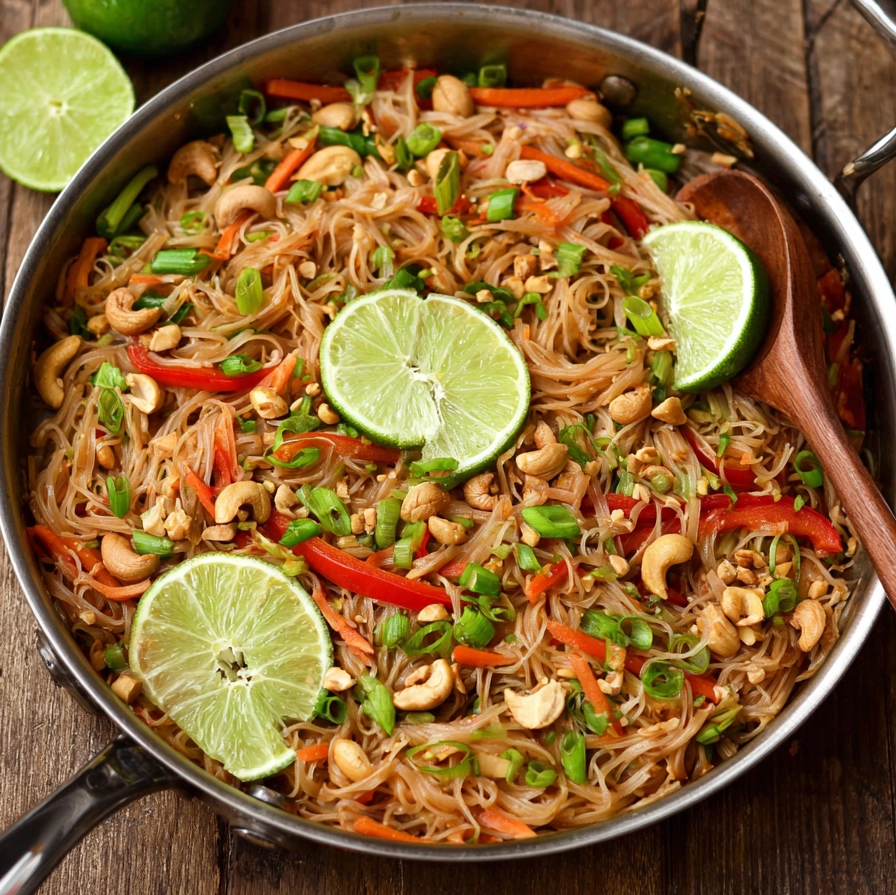
Pad Thai holds a special place in my kitchen, and the first time I made homemade Pad Thai, I felt amazed at how simple it was. Because this Pad Thai recipe uses chicken, fresh veggies, rice noodles, eggs, peanuts, cilantro, and a rich sauce, it always turns into a comforting meal. I reach for Pad Thai when I want fast flavor without fuss. Since Pad Thai cooks quickly and stays flexible with ingredients, it works beautifully for weeknights. This Pad Thai guide walks you through how to make it at home, how to adjust the flavors, and how to build a reliable routine for this dish.
My First Experience With Pad Thai at Home
A Memory of Making Pad Thai for the First Time
I still remember the night I decided to try Pad Thai at home. I had eaten Pad Thai many times at restaurants, yet I never thought I could match that bold flavor in my own kitchen. However, I wanted a homemade Pad Thai that tasted fresh, bright, and full of texture. I grabbed rice noodles, chicken thighs, and a few pantry basics. While the noodles soaked and the chicken cooked, the kitchen filled with the aroma of garlic and peppers. That moment pulled me in and made Pad Thai feel comforting and doable. With each stir, I realized this dish offered far more control than takeout. Because I could taste as I cooked, I learned how the sauce shaped everything. Tamarind paste brought tang, brown sugar added sweetness, and fish sauce created depth. Lime juice added life, and soy sauce gave gentle saltiness. Although I practiced a few times, Pad Thai quickly turned into a staple.
Why Pad Thai Feels So Approachable
Pad Thai gives you big flavor in very little time. Since it cooks quickly, you need only a bit of preparation to succeed. Once the noodles soften and the chicken browns, everything falls into place. Even better, Pad Thai requires only one pan after you prep your ingredients. Because of that, you move from one step to the next without much effort, and cleanup stays simple. The sauce pulls everything together, and the toppings add crunch and color. When you mix peanuts, cilantro, and lime into steamy noodles, each bite feels fresh and satisfying. With this guide, you can make Pad Thai anytime.
Print
Pad Thai
- Total Time: 35 minutes
- Yield: 4 1x
Description
Pad Thai is a delicious rice noodle dish you can make at home in about 30 minutes. It’s made with chicken, rice noodles, vegetables, eggs, peanut, cilantro, and irresistible homemade Pad Thai sauce.
Ingredients
14 oz rice noodles
2 tbsp peanut oil
1.5 lbs chicken thigh meat
2 tbsp peanut oil
1 large red bell pepper
6 oz bean sprouts
4 garlic cloves
1/2 tsp red pepper flakes
1/4 cup chopped green onion
2 eggs
1/4 cup tamarind paste
1/4 cup fish sauce
3 tbsp low sodium soy sauce
2 tbsp lime juice
1/4 cup brown sugar
1/2 tsp dried chili peppers
1/2 cup crushed peanuts
2–3 lime wedges
2 tbsp minced cilantro
Instructions
1. Cook rice noodles according to package, slightly under-cook. Drain.
2. Soak bean sprouts in cold water. Slice pepper, mince garlic, dice green onions. Dice chicken. Whisk eggs. Mix sauce ingredients.
3. Preheat pan over medium-high. Add oil and cook chicken. Set aside.
4. Add oil. Saute pepper. Add garlic, red pepper flakes, and sprouts.
5. Push veggies aside. Add eggs. Scramble lightly and mix in.
6. Add chicken and noodles. Pour sauce and toss.
7. Add green onions. Cook briefly.
8. Top with peanuts, cilantro, and lime.
Notes
Use gluten-free soy sauce if needed.
Tamarind adds tang and depth.
Shrimp cooks faster; sear briefly.
Reheat in a pan with broth to refresh noodles.
- Prep Time: 15 minutes
- Cook Time: 20 minutes
- Category: Main Course
- Method: Stovetop
- Cuisine: Thai
Nutrition
- Serving Size: 1
- Calories: 938
Building the Base for Homemade Pad Thai
Preparing the Noodles and Chicken
When making homemade Pad Thai, the noodles set the tone. Rice noodles soften fast, so you want to under-cook them slightly. They finish cooking in the pan later, which keeps them bouncy rather than mushy. While they soak, cut the chicken into small pieces. Because chicken thighs stay juicy, they work better than chicken breasts. Once your pan heats, add peanut oil and cook the chicken until the outside turns golden. Remove it and keep it ready. Doing this in stages keeps the texture right and prevents steaming. This simple approach makes your Pad Thai taste balanced.
Prepping the Vegetables and Eggs
Fresh vegetables bring life to Pad Thai. Slice a red bell pepper for sweetness. Rinse bean sprouts in cold water so they stay crisp. Mince garlic for aroma and chop green onions for brightness. When the pan heats again, add more peanut oil and cook the bell pepper first. As it softens, add garlic, red pepper flakes, and the bean sprouts. Stir a few times. Push everything aside and pour in the whisked eggs. Because the eggs cook quickly, you want to scramble them just enough before mixing them into the veggies. This step adds richness without slowing the cooking process.
The Heart of Pad Thai — The Sauce
Understanding the Flavor Balance
Pad Thai sauce holds everything together. Tamarind paste gives tangy flavor, and fish sauce brings savory depth. Soy sauce adds a familiar taste, brown sugar softens the sharp edges, and lime juice brightens everything. This balance makes Pad Thai a standout dish. You can adjust the amounts slightly to match your taste, but the original ratio creates honest flavor. When you whisk the sauce before cooking, you save time later. Since Pad Thai cooks fast, having the sauce ready ensures smooth movement from step to step. Once you add the sauce to the noodles, the aroma hits instantly.
Why Tamarind Matters
Tamarind gives Pad Thai its signature twist. Without it, the noodles taste flat. Tamarind brings gentle fruitiness along with a slight sour edge. Because it isn’t salty, it plays a different role than soy sauce. Many people try to replace it, yet Pad Thai depends on tamarind for its character. When you store tamarind paste in the refrigerator, it lasts a long time, so you can use it for multiple batches. After you combine the sauce with the noodles and chicken, everything absorbs the flavor. The result stays bold, lively, and satisfying. This sauce keeps Pad Thai memorable.
Bringing Pad Thai Together
Tossing the Ingredients
When all elements sit ready, Pad Thai comes together fast. Add the chicken back to the pan, then add the noodles. Pour the sauce over the top and toss. The noodles soak up flavor quickly, so keep the heat steady. Because the sauce caramelizes slightly, it coats everything evenly. Keep the noodles moving so they don’t clump. Add green onions and toss again. Small steps like this help you reach a balanced dish. Even though Pad Thai looks simple, the quick cooking gives the flavor its punch.
The Final Touches That Make a Difference
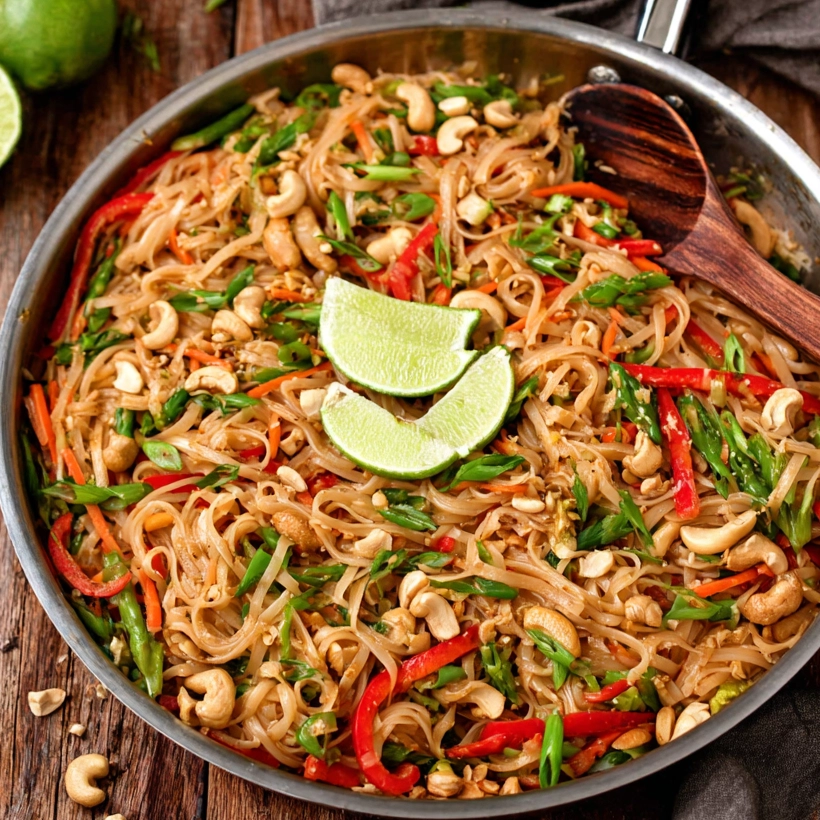
The toppings complete Pad Thai. Crushed peanuts offer crunch and contrast. Cilantro gives freshness. Lime juice brings brightness that wakes up the dish. When you squeeze lime over warm noodles, the aroma lifts instantly. You can also add more red pepper flakes if you want heat. Since Pad Thai adapts easily, families love adjusting it to taste. You may prefer more chicken, fewer sprouts, or a little extra lime. All those changes work. This flexibility makes Pad Thai a dish you return to again because it always fits your mood and schedule.
Pad Thai Variations and Practical Tips
Making Pad Thai Fit Your Needs
Once you learn the basic method, you can adjust Pad Thai in many ways. Chicken Pad Thai stays popular, yet shrimp works beautifully. Since shrimp cooks faster, you want to sear it briefly until opaque. Then remove it and add it later just like chicken. You can also use tofu if you want a lighter version. Because tofu absorbs flavor well, press it first so it browns nicely. For a gluten-free version, switch to tamari or coconut aminos. Since soy sauce contains gluten, simple substitutions keep everything safe while preserving flavor.
How to Reheat Pad Thai
Pad Thai reheats well if you use the right method. A pan works better than a microwave. Add a little oil, then heat the noodles over medium heat. Pour in chicken broth to loosen the sauce and bring the noodles back to life. Because rice noodles firm up when chilled, the broth keeps them tender. Toss and warm through. This method saves texture and brings the dish close to the original. When you know how to reheat Pad Thai correctly, leftovers stay enjoyable rather than dry.
FAQ
Can I make Pad Thai without tamarind?
You can, but the flavor changes. Tamarind provides the tang Pad Thai needs.
Can I use chicken breast instead of thighs?
Yes, but breasts cook faster and can dry. Thighs keep more moisture.
Why do my noodles turn mushy?
You likely cooked them too long before adding them to the pan. Undercook them slightly.
Can I make Pad Thai ahead of time?
You can prep everything earlier, but cook the dish right before serving for best texture.
How spicy should Pad Thai be?
It depends on your taste. Add dried chili flakes slowly so you stay in control.
Conclusion
Pad Thai brings bold flavor, color, and balance to your table without much work. Because it cooks fast and stays flexible, it fits busy nights. Once you learn how the noodles, chicken, vegetables, and sauce come together, you gain a dependable recipe for any weeknight or weekend. With fresh ingredients, thoughtful preparation, and bright toppings, Pad Thai becomes a dish you enjoy again and again. This guide helps you build confidence and create a routine that keeps Pad Thai in your regular lineup.
Discover more delicious recipes by following me on Facebook and Pinterest.