
Before jumping into the main parts, here is a brief introduction to the ideas covered in this article. You’ll learn how chicken chow mein became a favorite in so many homes, why its flavor stands out, and how easy it is to prepare a version that tastes better than takeout. You’ll also find tips for texture, sauce balance, stir fry timing, and noodle choices. Each section gives you clear steps to help you make a satisfying plate of stir fry noodles with juicy chicken, fresh vegetables, and a bold Chinese chicken noodles sauce.
The Story Behind Chicken Chow Mein and Why It Stands Out
Nostalgia and Flavor in One Bowl
I still remember the first time chicken chow mein made me pause at the dinner table. I had just moved into my first apartment, and the tiny kitchen barely held two pans. I wanted something fast, comforting, and packed with flavor. A friend dropped by with a container of freshly made chicken chow mein, and one bite convinced me that this simple dish could easily beat any takeout box. The mix of springy noodles, tender chicken, and that deep brown sauce hit every note. Since then, chicken chow mein has stayed close to my heart because it offers an easy and delicious way to bring Chinese chicken noodles into my home kitchen. Every cook I know seems to have their own version, yet they all point to the same unbeatable qualities—quick cooking, warm aromas, and a balance of savory and aromatic flavors.
Why Chicken Chow Mein Works Every Time
As I kept making chicken chow mein, I realized why it became a go-to dish. The noodle stir fry method keeps everything fresh and lively. You feel the crunch of cabbage, the softness of chicken, and the slight chew of noodles all in one forkful. This mix gives the dish its character. When I add the sauce, everything ties together instantly. The salty soy, the gentle sweetness, and the hint of sesame oil wrap every ingredient without weighing it down. While many recipes try to imitate restaurant versions, homemade chicken chow mein beats them because it gives you full control over texture and seasoning. With just one pan and a few basic ingredients, you can build a satisfying and flavorful dinner.
Print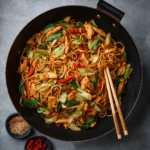
Chicken Chow Mein
- Total Time: 25 minutes
- Yield: 4 servings 1x
Description
Make the best tasting chicken chow mein even better than takeout using fresh ingredients, juicy chicken, crisp veggies, and springy noodles.
Ingredients
6 oz boneless chicken breast or thighs, thinly sliced
1 tablespoon Shaoxing wine or dry sherry
2 teaspoons cornstarch
1/4 teaspoon salt
1/4 cup chicken broth
2 tablespoons Shaoxing wine or dry sherry
2 tablespoons oyster sauce
1 tablespoon soy sauce
2 teaspoons sugar
1/4 teaspoon white or black pepper
1 teaspoon sesame oil
2 tablespoons peanut or vegetable oil
4 cups shredded cabbage
2 cloves garlic, finely chopped
1 tablespoon minced ginger
10 oz fresh chow mein noodles or 6 oz dried
2 small carrots, julienned
1 sliced hot pepper (optional)
4 green onions, cut into 2-inch pieces
Instructions
1. Mix chicken with wine, cornstarch, and salt.
2. Combine all sauce ingredients in a small bowl.
3. Boil noodles until al dente and rinse under tap water.
4. Heat 1 tablespoon oil over medium-high and sear chicken on both sides until just cooked. Remove.
5. Add remaining oil, ginger, and garlic. Stir briefly.
6. Add carrot and cabbage and cook 1 minute.
7. Add noodles, return chicken to pan, and pour sauce over.
8. Toss with tongs until coated.
9. Add pepper and green onions. Toss again and serve hot.
Notes
Add 1 teaspoon dark soy sauce for deeper color.
Use 5 cups coleslaw mix to replace cabbage and carrot.
- Prep Time: 15 minutes
- Cook Time: 10 minutes
- Category: Main Dish
- Method: Stir Fry
- Cuisine: Chinese
Nutrition
- Serving Size: 1 serving
Mastering the Chicken for Chow Mein
Preparing Tender Chicken for Stir Fry Noodles
Cooking chicken chow mein starts with the chicken itself. When you prepare the chicken the right way, you get soft, juicy pieces that stay tender even after high-heat cooking. Thin slices cook fast, so they avoid dryness. I learned early on that marinating makes a huge difference. A simple mix of Shaoxing wine or dry sherry, cornstarch, and salt gives chicken the perfect coating. As you massage it with your hands, you notice how the cornstarch builds a light barrier that protects the meat during the quick stir fry. Once you place the chicken in the hot pan, the edges turn golden in less than a minute. That short sear adds flavor while keeping the inside moist. With chicken chow mein, this step sets the tone for the entire dish.
Cooking Chicken Quickly and Correctly
Another reason chicken chow mein tastes so good is the speed of the cooking process. You don’t simmer or stew anything. Instead, you quickly brown the chicken on both sides until it turns white. The flavor builds through heat control. When you remove the chicken from the pan, you keep it tender instead of letting it dry out. This timing matters because stir fry noodles rely on a sequence. The chicken goes back into the pan only when the vegetables and noodles are ready. This method lets the sauce cling to everything evenly. If the chicken stays in the pan too long, it overcooks and loses its juiciness. When done right, the chicken remains a highlight—not just an ingredient—of your chicken chow mein.
How to Handle the Vegetables and Noodles
Creating the Right Vegetable Texture
Chicken chow mein always includes a good mix of vegetables, and their texture brings energy to every bite. When I started cooking this dish, the first mistake I made was overcooking the veggies. They turned soft and lost their color. Once I learned to stir them only briefly, everything changed. Cabbage softens slightly while staying crisp. Carrots bend just enough to blend in. Ginger and garlic release strong aromas as soon as they hit the oil. These small details create the stir fry noodles flavor that people love. If you want convenience, using pre-cut coleslaw mix works well. It keeps the vegetable mix consistent and saves time. When the vegetables stay bright and crisp, chicken chow mein turns into a lively and fun dish.
Choosing and Preparing the Noodles
The noodles make chicken chow mein what it is, so your choice matters. Fresh chow mein noodles cook in under a minute, while dried noodles need a few extra minutes. Either works as long as you avoid overcooking. I always remove them from the water one minute early because they continue to cook during the stir fry. Rinsing them cools them quickly so they don’t stick or clump. Once drained, they wait for the final toss in the pan. When combined with the vegetables and chicken, the noodles absorb the sauce instantly. The result is a balanced plate of Chinese chicken noodles with springy texture and rich flavor. The noodles stay lively instead of heavy, which is exactly what makes chicken chow mein satisfying.
Bringing the Sauce and Stir Fry Together
Building a Sauce That Never Fails
The sauce creates the backbone of chicken chow mein. It blends chicken broth, Shaoxing wine, oyster sauce, soy sauce, sugar, pepper, and sesame oil. This combination gives the dish its recognizable flavor. When I first mixed these ingredients, I noticed how the scent shifted from sweet to savory in seconds. This mix coats every noodle and vegetable without overpowering them. Because this sauce comes together in one small bowl, you can prepare it even on a busy night. This convenience makes chicken chow mein an ideal weeknight option. When poured into the pan, the sauce thickens slightly as it touches the heat. The glossy finish appears instantly, giving the whole stir fry noodles dish a beautiful shine.
Combining Everything at the Right Moment
The final toss brings chicken chow mein together. Once your noodles are in the pan, you add the cooked chicken and pour the sauce. Tongs help you move everything around without breaking the noodles. As the sauce warms, it disappears into the ingredients. You then add green onions and, if you want extra heat, sliced peppers. Every piece becomes coated. This quick mixing keeps the vegetables crisp and the chicken juicy. Because chicken chow mein cooks fast, you always end with fresh flavors instead of stewed ones. When served hot, the aromas rise from the plate. Every forkful feels balanced because the sauce pulls the chicken, noodles, and vegetables together.
Tips, Variations, and Serving Ideas for Chicken Chow Mein
Easy Variations for Any Kitchen
One of the reasons chicken chow mein stays popular is its flexibility. Once you understand the basic method, you can adjust ingredients based on what you have. You can use thighs or breast meat, fresh or dried noodles, and cabbage or pre-cut coleslaw mix. Each variation still gives you familiar stir fry noodles flavor. If you like deeper color, add a bit of dark soy sauce. If you prefer lighter flavor, use vegetable broth instead of chicken broth. This dish gives you room to play without losing the essence of chicken chow mein. Because everything cooks in one pan, cleanup stays simple. This practicality makes the dish perfect for both beginners and experienced cooks.

How to Serve Chicken Chow Mein
Serving chicken chow mein feels easy because the dish already carries strong flavor and texture. You can serve it as a main dish without needing extra sides. If you want a fuller meal, pair it with simple steamed greens or a light soup. Because the noodles stay springy and the sauce remains glossy, the dish presents well on any plate. When cooking for guests, you can double the ingredients without changing the method. The stir fry noodles approach works the same whether you cook a small batch or a large one. As long as you keep the heat high and move the ingredients quickly, your chicken chow mein will taste fresh and delicious every time.
FAQ
Is chicken chow mein different from lo mein?
Yes. Chow mein uses a quicker, drier stir fry method for a firmer noodle texture, while lo mein focuses on tossed noodles with more sauce.
Can I use other proteins besides chicken?
Yes. Shrimp, beef, pork, or tofu work well with the same stir fry noodles method.
What noodles work best?
Fresh chow mein noodles give great texture, but dried noodles work as long as you cook them slightly under the package time.
How do I keep noodles from sticking?
Rinse them after boiling and toss them quickly in the stir fry so they absorb the sauce instead of clumping.
Can I make chicken chow mein ahead of time?
You can prep vegetables and sauce early, but cook the noodles and stir fry right before serving for the best texture.
Conclusion
Chicken chow mein brings comfort, flavor, and speed to your kitchen. Its balance of juicy chicken, crisp vegetables, and lively noodles makes it a dish worth repeating. Once you master the simple steps, you get reliable results every time. The process stays quick, the flavors stay bold, and the cleanup stays easy. Whether you cook it for a fast weeknight meal or a weekend gathering, chicken chow mein remains one of the most satisfying Chinese chicken noodles dishes you can prepare at home.
Discover more delicious recipes by following me on Facebook and Pinterest.